Tender-ready inclusion for Brisbane 2032
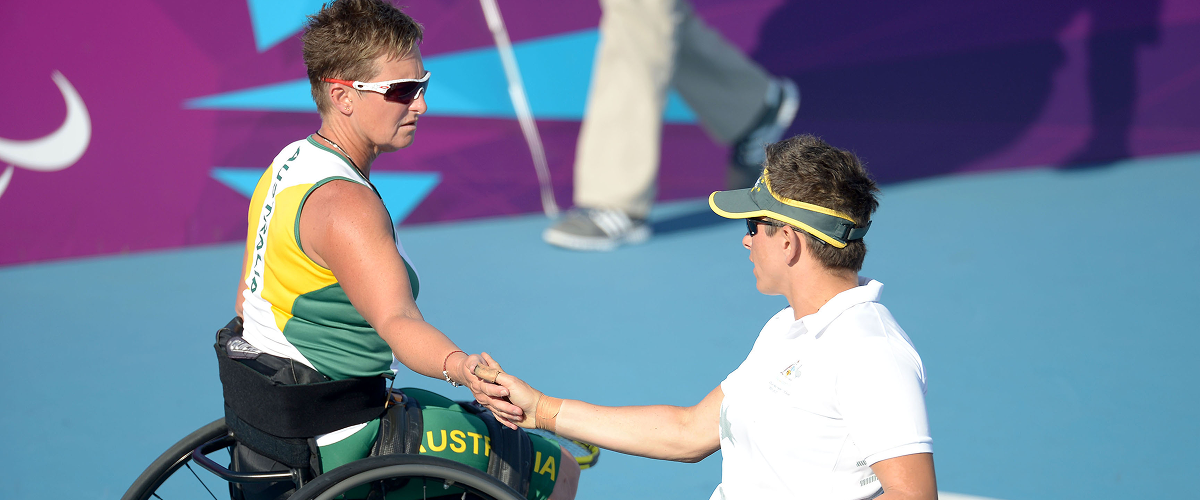
In 2012 I represented Australia in wheelchair tennis at the London Paralympic Games. Over a decade on the international circuit, from 2006 to 2016, I watched my sport move from being allowed into mainstream tennis to being valued within it. That journey holds a lesson for every organisation preparing to bid for Brisbane 2032 work: being able to participate is not the same as being genuinely included or given an equitable opportunity to compete.
Integration opened the door
The International Tennis Federation (ITF) brought wheelchair tennis into its governance in 1998. In 2002, Tennis Australia made the Australian Open the first Grand Slam to include wheelchair tennis, and by 2007 all four Slams had followed. That was integration, and it was a genuine achievement. The language was already starting to shift, too. Tennis Australia’s 2012–13 annual report, under a section headed Inclusion, noted that its wheelchair summer series had been integrated with the Australian Open Series for the first time.
But access came with conditions. Early in my career, wheelchair events were often scheduled after the mainstream tournament had finished, and more than once we arrived as the infrastructure was being packed down. Even when we played alongside the main draw, the mainstream event took precedence for court access whenever weather disrupted play.
Globally, conditions improved markedly over my years on tour. Even so, we trained as hard and travelled as far as the world’s best-known players, playing on the same courts and often staying in the same hotels as the likes of Federer, Djokovic, Sharapova and the Williams sisters, yet our prize money, sponsorship and media coverage were far more limited.
We were in the tournament. We did not yet share equally in its resources, recognition or rewards.
Four steps: where is your organisation?
In sport, the first step was called integration. In organisations, the first step is usually being accessible. Both are about getting in. What matters is what happens next:
- Accessible: meets minimum legal and technical standards, such as building access standards and web accessibility guidelines, and fixes barriers as they are found.
- Universally designed: designed for everyone, including disabled people, to work for as many people as possible from the start.
- Inclusive: designed with disabled people, not just for them.
- Transformative: disabled people share decisions, power and resources equitably, and systems change as a result.
Most organisations sit across more than one step. Where does your organisation sit today? If your next tender response claims a step you can’t back with evidence, evaluators are likely to notice.
Raising the bar
Australia has done this before. Gold Coast 2018 hosted the largest integrated para-sport program in Commonwealth Games history. Kurt Fearnley AO, a five-time Paralympian who carried Australia’s flag at the closing ceremony, called it the most inclusive event our nation had hosted.
Brisbane 2032 aims higher again: to be the most accessible Games in history, with universally designed venues. Its legacy strategy, Elevate 2042, names advancing accessibility and empowering people with disability as a foundation. The Queensland Procurement Policy 2026, which applies to the Games, commits to building a diverse supplier base, including businesses owned or operated by people with disability. The Queensland Government’s accessibility in procurement guide encourages buyers to look beyond minimum compliance.
Not every tender you see will mandate disability criteria, but the direction is clear, and contracts will keep being released in waves between now and 2032. If you plan to bid, the buyers you are bidding to are being asked to look for more than compliance.
Five questions to ask before you bid
- Supplier participation: Do disabled-owned and disability-led businesses get a real chance to compete in your supply chain, not just the right to apply?
- Accessible by design: Is physical, digital, information and service accessibility built in from the start?
- Workforce capability: Do your people understand reasonable adjustments, accessible communication and inclusive customer service?
- Meaningful engagement: Are disabled people involved as paid experts with real influence?
- Evidence and legacy: Can you show policy, measurable targets and outcomes tracked over time, beyond a single contract?
If you answered “not yet” to any of these, you are not alone, and you have time. Evaluators reward claims they can verify. Generic commitments rarely score well, and overstated ones create risk once you have signed the contract. The best time to build your evidence is now, before the next EOI or tender lands.
A legacy measured by what changes
Wheelchair tennis did not get where it is today in one step. It moved from getting in the door, to being built into the schedule, towards being valued as part of the sport. Brisbane 2032 offers your organisation the same journey, on a far larger scale.
The true measure of an inclusive Games will be what remains possible for disabled people long after the final medal is awarded and the infrastructure is packed down.
Plan your Brisbane 2032 readiness with Tendered
If you’re preparing for Brisbane 2032 opportunities and want to know whether your disability inclusion will stand up to evaluation, Tendered can help. Get in touch to discuss your next tender or grant.
About the author
Janel represented Australia in wheelchair tennis at the London 2012 Paralympic Games. With more than 30 years of work and lived experience of disability, through her consultancy Real People; Real Lives, she now helps governments, businesses and community groups build a world that is more inclusive of people with disability. She supports them in making meaningful changes for staff and customers, write fair policies, and set accessibility requirements for buying and tendering.
Related posts